


Some error occured while loading the Quick View. Please close the Quick View and try reloading the page.
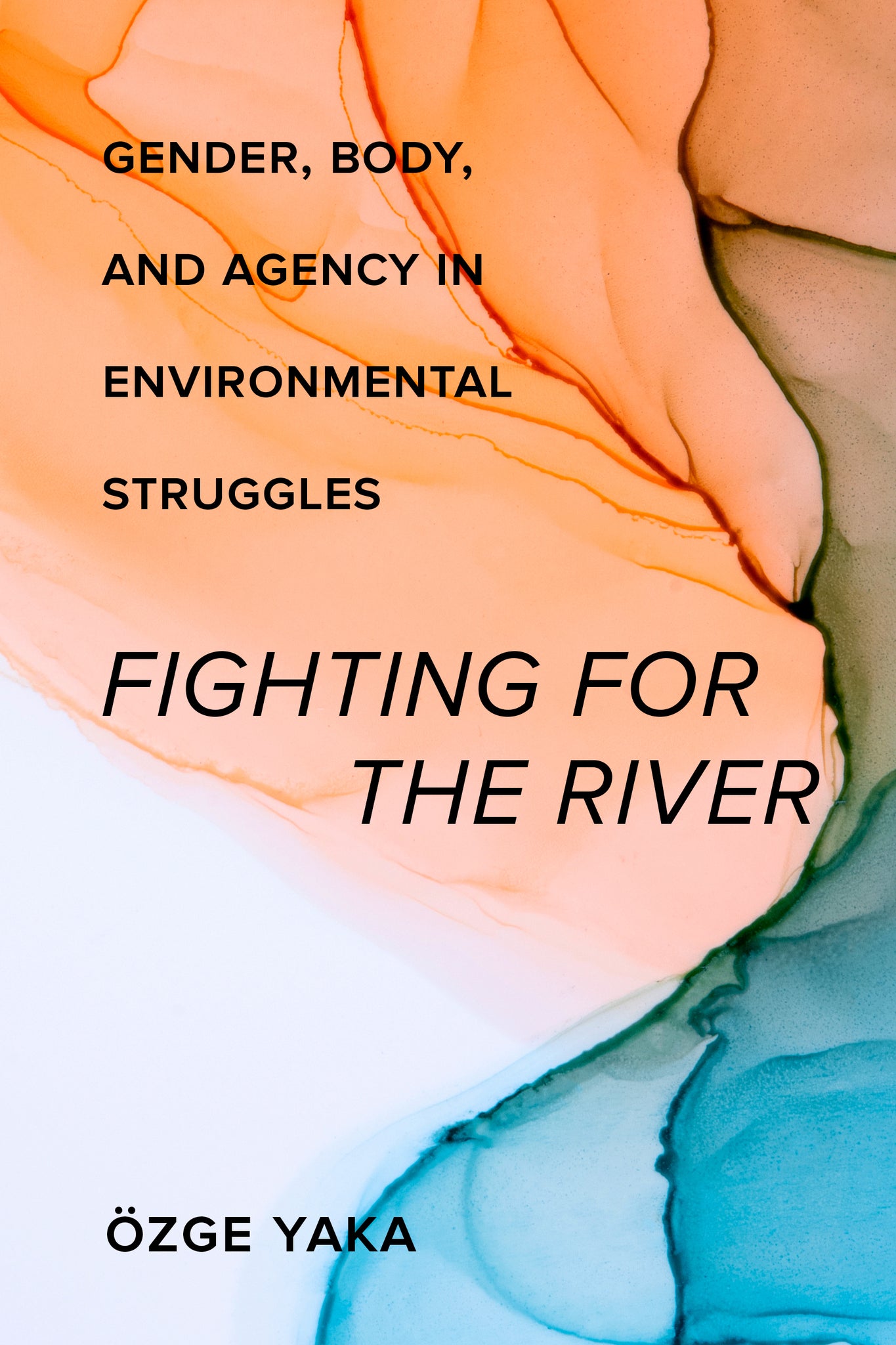
Fighting for the River portrays women's intimate, embodied relationships with river waters and explores how those relationships embolden local communities' resistance to private run-of-the-river hydroelectric power plants in Turkey. Building on extensive ethnographic research, Özge Yaka develops a body-centered, phenomenological approach to women's environmental activism and combines it with a relational ontological perspective. In this way, the book pushes beyond the "natural resources" frame to demonstrate how our corporeal connection to nonhuman entities is constitutive of our more-than-human lifeworld. Fighting for the River takes the human body as a starting point to explore the connection between lived experience and nonhuman environments, treating bodily senses and affects as the media of more-than-human connectivity and political agency. Analyzing local environmental struggles as struggles for coexistence, Yaka frames human-nonhuman relationality as a matter of socio-ecological justice.

Price: $29.95
Pages: 248
Publisher: University of California Press
Imprint: University of California Press
Publication Date:
25 July 2023
Trim Size: 9.00 X 6.00 in
ISBN: 9780520393615
Format: Paperback
BISACs:
"Yaka’s empirical materials are a rich ground to explore a Turkish discursive environmental politics involving imaginaries and invocations of the law, the state, and the nation, and rural/urban distinctions, all refracted through gendered and class positionalities. The book also offers a nuanced theoretical elaboration of contemporary research on environmental justice, presenting a relational ontological approach that emphasizes the social, corporeal, and existential embeddedness of humans and nonhumans, thus going beyond frameworks of economic and cultural valuations and dichotomies of ecology versus environment. Overall, this monograph should be required reading for scholars of environmental governance and politics in Turkey and the Middle East and, beyond the region, environmental anthropologists, environmental sociologists, political ecologies, and scholars in the wider environmental humanities and social sciences."
Özge Yaka is Senior Researcher at the Institute of Geographical Sciences, Freie Universität Berlin.
Contents
List of Illustrations
Abbreviations
Acknowledgments
Introduction: Gender, Body, and Relationality in
the Struggle for the Environmental Commons
1. Saving “God’s Water”: Motivations and Dynamics of the Anti-HEPP Struggle
2. Resources, Livelihoods, Lifeworld: Linking Gender and Environment through the Lived Body
3. Sense, Affect, Emotion: Bodily Experiences of River Waters and Emergent Political Agency
4. Place, Body, Memory: River Waters and the Immanence of the Past in the Present
5. Ethics, Ontology, Relationality: Grassroots Environmentalism and the Notion of
Socio-Ecological Justice
Conclusion: Toward an Ecological Approach to Lifeworld, Sociality, and Agency
Appendix
Notes
References
Index
List of Illustrations
Abbreviations
Acknowledgments
Introduction: Gender, Body, and Relationality in
the Struggle for the Environmental Commons
1. Saving “God’s Water”: Motivations and Dynamics of the Anti-HEPP Struggle
2. Resources, Livelihoods, Lifeworld: Linking Gender and Environment through the Lived Body
3. Sense, Affect, Emotion: Bodily Experiences of River Waters and Emergent Political Agency
4. Place, Body, Memory: River Waters and the Immanence of the Past in the Present
5. Ethics, Ontology, Relationality: Grassroots Environmentalism and the Notion of
Socio-Ecological Justice
Conclusion: Toward an Ecological Approach to Lifeworld, Sociality, and Agency
Appendix
Notes
References
Index